


At some point, the United States will suspend its bombing campaign in Iran. That moment may come sooner than we’d expect. Domestic political pressure to continue the campaign may become too great as American casualties mount, markets tumble, and splits in the MAGA coalition become more and more visible.
In a way, Donald Trump has already set himself up to declare victory in Iran. The shifting justifications for starting this war provide a host of rationales for ending it, too. He could proclaim the regime has changed because the Ayatollah is dead (even though it’s the same regime); or he could declare the ballistic missile threat neutered (because it probably is); or—most recently—that Iran’s (small) navy has been totally destroyed.
But if and when Donald Trump declares victory and moves on, the dust won’t settle. The conflict in Iran would just enter a different phase. Reporting from Alex Ward of The Wall Street Journal (an excellent journalist with well-placed sources) suggests that the Trump administration is looking for proxies on the ground to take up the fight—potentially Kurdish militias. Other outlets have reported the same.
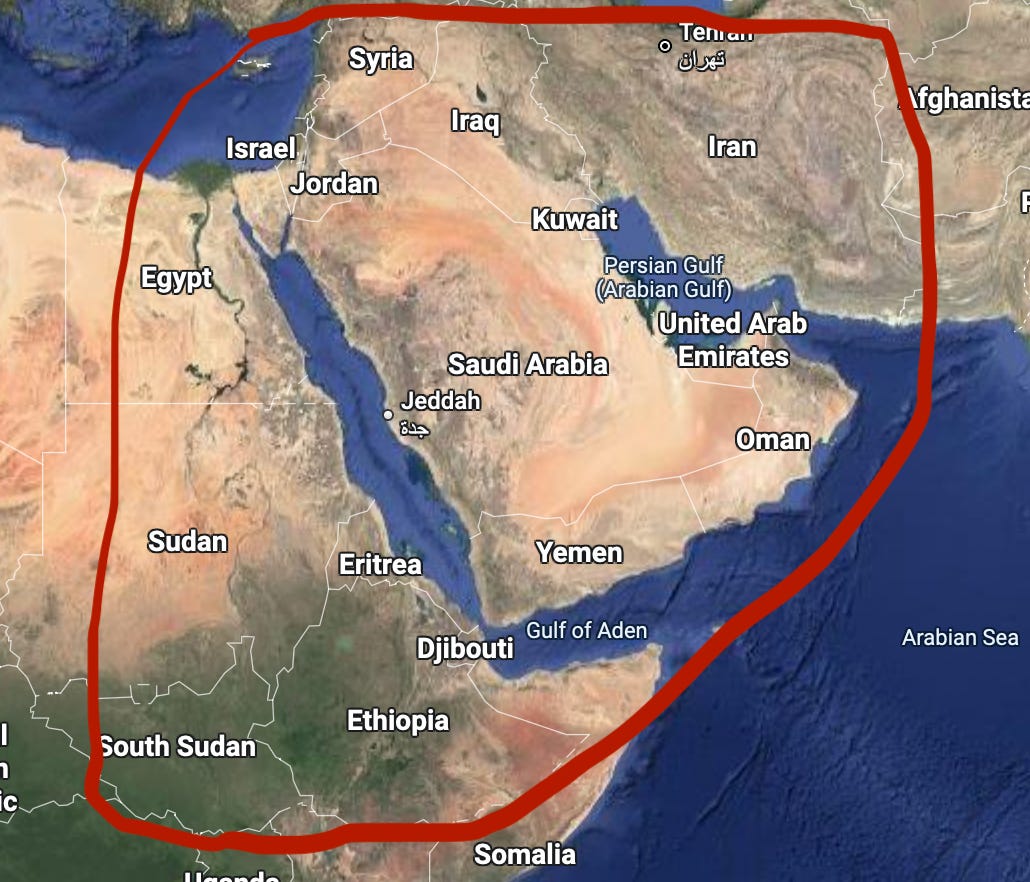
From a humanitarian perspective, the big fear is that a new kind of chaos may be unleashed—one that engulfs not just the Middle East, but the Horn of Africa as well. Most commentary I’ve seen has not taken into account the fact that many of the key players currently defending themselves against Iran’s relentless attacks are also, on the other side of the Red Sea, fighting each other in a series of interlocking conflicts. That same dynamic may soon play out in Iran.
If so, a massive geography stretching from South Sudan to Iran may become enmeshed in a web of conflict—devastating the lives and livelihoods of some 800 million people. It’s a grim scenario, but one that may yet unfold in tandem with conflict in Iran.
