


Around the United Nations, it is both reasonable and commonplace to decry the Security Council’s failures to confront the massive global crises of our day. The Council is supposed to be the place where conflict management happens—but all too often, the competing interests of veto-wielding members clash, leaving it unable to take meaningful action. Today, the most obvious examples are Ukraine and Gaza. But as Anjali Dayal and I discuss in this new episode of To Save Us From Hell, Syria is where the post–Cold War consensus at the Security Council completely unraveled, paving the way for the geopolitical divisions that stymie the Council to this day.
Syria was the conflict that broke the Security Council.
As anti-regime protests morphed into civil war in 2011, Russia quickly dug in its heels in defense of the Assad regime, putting it at odds with the United States, France, and the United Kingdom. Meanwhile, the civil war sparked a massive regional and international migration crisis—some 6 million Syrians fled abroad. But there was precious little the Council could do, owing to the deep divisions between Russia and the rest. Rather than serving as a forum for problem-solving (with a few notable exceptions, which we discuss in the episode), the Council became a venue for Samantha Power and her Russian counterpart to trade barbs.
This paralysis remained until very recently. In November, the Council voted to lift sanctions imposed on Ahmed al-Sharaa who became Syria’s president and de-facto leader following a stunning military victory over the regime of Bashar al Assad one year ago.
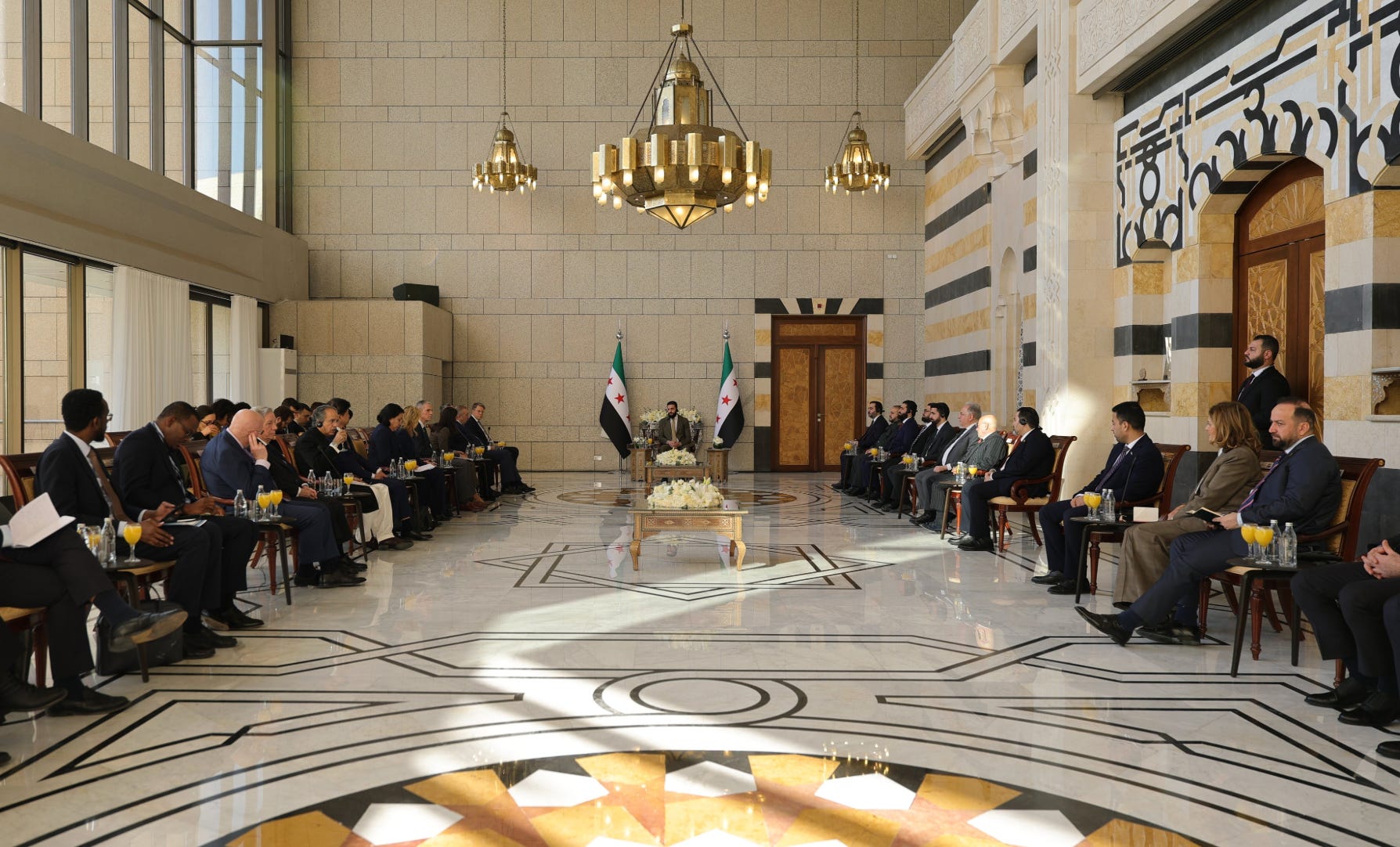
This is why it is so profoundly remarkable that, as I write this, the entire UN Security Council is in Damascus, on a trip organized by the Slovenian UN Ambassador. It is hard to overstate what a significant turning point this represents—both for the Security Council and the United Nations as a whole. For thirteen long years, the civil war in Syria was the largest and most brutal conflict in the world, and one that stymied the UN by exposing massive geopolitical rifts between key global powers. Now, all fifteen members are in Damascus, in an important show of unity. Anjali and I break down why this trip is so significant and what role the UN can play in supporting Syria’s democratic transition.
Also in this episode: we discuss shocking new revelations about the UN’s budget, and what the official “pre-launch” of the selection process for the next Secretary-General tells us about how the UN’s next leader will be chosen.
The full episode is available immediately below the fold for our paying subscribers. Here is a discount link.
And if you’d like to support To Save Us From Hell and all we do here at Global Dispatches at full price, use this link.
