


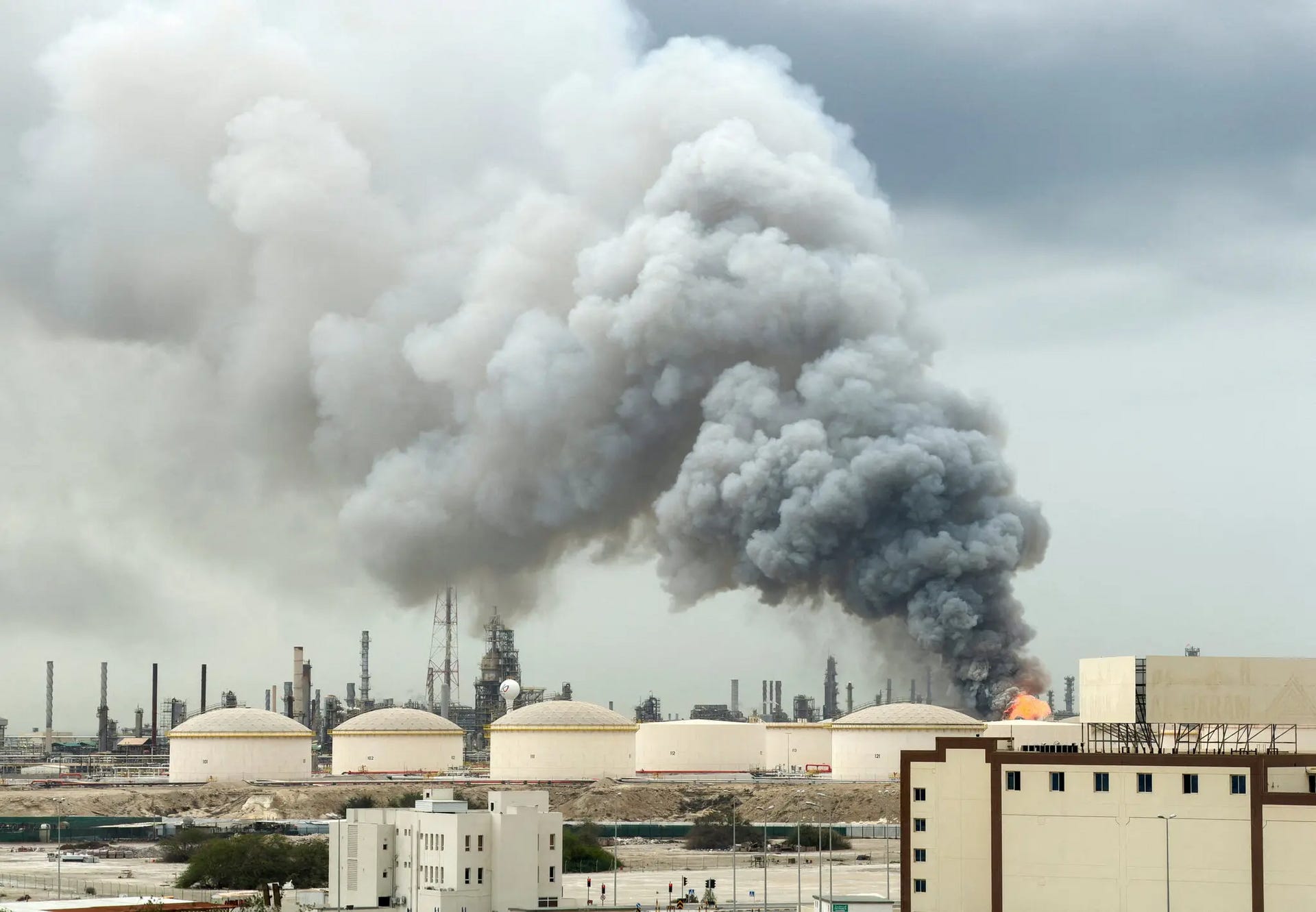
War is bad for many reasons. The economist Paul Collier calls war “development in reverse.” Hard-won social and economic gains can go up in smoke when a country descends into conflict. Infrastructure is destroyed, health systems are disrupted, children miss school — these are all consequences of war. War is also bad for civil liberties and individual rights.
Worst of all, war kills people — mostly civilians. There is some dispute in academic circles about what proportion of civilians are killed compared to combatants, generalized across all conflicts since World War II. Some claim that the civilian-to-combatant death ratio is about 90%. Others say the number probably hovers around 50–60%. Whatever the case, a huge number of people who are not fighters die in wars fought by others.
This is from Brown University’s Costs of War Project:
An estimated over 940,000 people were killed by direct post-9/11 war violence in Iraq, Afghanistan, Syria, Yemen, and Pakistan between 2001-2023. Of these, more than 432,000 were civilians. The number of people wounded or ill as a result of the conflicts is far higher, as is the number of civilians who died “indirectly,” as a result of wars’ destruction of economies, healthcare systems, infrastructure and the environment. An estimated 3.6-3.8 million people died indirectly in post-9/11 war zones, bringing the total death toll to at least 4.5-4.7 million and counting.
In the current Iran war, it is hard to determine the exact ratio. But we do know that scores of girls died when their school was bombed, probably by the United States, on February 28. And dozens of people in the wrong place at the wrong time throughout the region also died, including a Pakistani taxi driver who was hit by falling debris in Dubai; a Maronite priest in Lebanon who was killed by Israeli tank fire; and nine Israelis who did not make it to their bomb shelter in time, among others. These anecdotes will certainly compound and civilian death toll climb.
But perhaps the most enduring pathology of war is the law of unintended consequences. We saw a startling example of that this week in New York City, where two men tried to set off an improvised explosive device outside the Mayor’s residence.
The 2003 US invasion and occupation of Iraq may have displaced Saddam Hussein, but it also gave birth to the Islamic State, which at one point controlled a large swath of Iraq and Syria and committed genocide against the Yazidis. Though defeated on the Iraqi and Syrian battlefields, we are still living with the aftermath of the Islamic State’s rise to power 15 years ago. On Monday, two teenagers who allegedly pledged allegiance to ISIS were arrested for trying to detonate a bomb outside Gracie Mansion.
Such are the unpredictable chain reactions that war inevitably sets into motion.
Just 11 days into the Iran war, we are already seeing some of them play out.
