


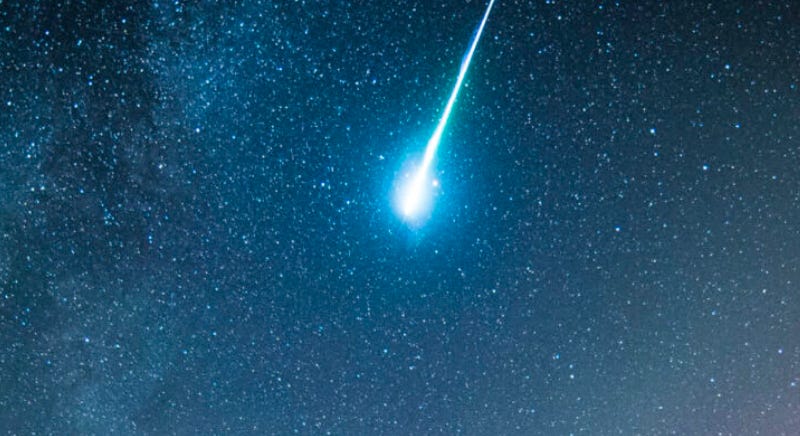
An asteroid impact is what is known as a “high-impact, low-probability event.” It probably won’t happen, but if it does, it would be really bad. How bad? If an asteroid of about 100 meters impacted Earth, it would carry energy several thousand times more powerful than the Hiroshima nuclear bomb. An asteroid larger than a kilometer could wipe out civilization itself.
The chances of that happening are remote — but they are greater than zero. So, about a decade ago, two UN entities — the United Nations Committee on the Peaceful Uses of Outer Space and the United Nations Office for Outer Space Affairs, or UNOOSA — established a planetary defense system to guard against this risk. This includes a network of observatories that monitor the skies for potentially dangerous asteroids and a network of space agencies ready to respond to threats should one be detected.
This system works. We know that because it was tested.
In late 2024, an observatory in Chile identified a potentially threatening asteroid that could strike Earth in 2032. The UN-backed network was alerted, and scientists around the world quickly studied the size and trajectory of the asteroid, known as 2024 YR4. Meanwhile, a group of 20 space agencies with planetary defense programs met under UN auspices to discuss how to respond. Further calculations determined that the asteroid was smaller than initially thought, and therefore not likely to become a threat. But this experience was the first real-world test of how a system of international cooperation would respond to a potentially dangerous asteroid. It is a lesson in global governance — and how efforts to guard against global catastrophic risk can go right.
To discuss the potential consequences of an asteroid impact, and how we have built a system of planetary defense to guard against this risk, I am joined by Romana Kofler, program management officer at the United Nations Office for Outer Space Affairs, and Anja Olin-Pape, head of programs at the Global Challenges Foundation.
We kick off by discussing the ways in which an asteroid impact could disrupt life on Earth and cause mass destruction, before turning to a longer conversation about how international cooperation and global governance have given us the tools to prevent an asteroid impact — and the catastrophe that would entail.
Today’s episode is produced in partnership with the Global Challenges Foundation. The foundation is dedicated to raising awareness of global catastrophic risks and strengthening global governance to address them. The Global Challenges Foundation’s 2026 Global Catastrophic Risks report outlines five of the biggest risks facing humanity today, including an asteroid colliding with earth, the topic of this episode. You can find the report here.
Transcript edited for clarity
Mark Leon Goldberg: So, Anja, I wanted to kick off with you. An asteroid impact is what’s known as a high-impact, low-probability event. What do we mean by that?
Anja Olin Pape: High-impact, low-probability events are a special kind of risk. We know them quite familiarly through our recent pandemic experience. It could also be certain climate disasters, tipping points, or even volcanic eruptions. So, things that have low likelihood of happening, but when or if they do, they impact our lives in a really great way.
Mark Leon Goldberg: And Romana, I wanted to ask you, what would the impact of an asteroid be for people on Earth? Like, what do we know about the science behind what an impact might entail?
Romana Kofler: Well, we know a lot about the science of asteroids because we have since decades, through space agencies and the work globally, improved our capacities to observe asteroids, so to detect, track them, to find them. Every planetary defender saying is, you have to find asteroids before they find us. So, to put this into perspective in terms of what could an asteroid impact entail or what would be the consequences, objects, asteroids around 10 meter in size, for example, can cause some local damage.
A 40-meter asteroid could already cause a city-wide damage. If you recall the 2013 event over Chelyabinsk, a city in the Russian Federation, that was a 20-meter asteroid, and it resulted in a shockwave, shattering windows, damaged buildings, and several people were injured. So, the asteroids that are around 50 to 60 meters wide, and those are still the most difficult to detect, especially if they come from behind the sun, they can really cause damage that if it’s a populated area, we would aim to avoid.
Mark Leon Goldberg: So, it really seemingly comes down to both the size of the asteroid and the location of where it impacts Earth?
Romana Kofler: Exactly. For example, over 100 years ago, the Tunguska event, which occurred on 30th June, 1908, over Siberia near Tunguska River, there was an asteroid estimated to be around 60 meters wide, and it exploded in the air, flattening around about 2,000 square kilometers of Siberian Forest. This was the largest known asteroid ever in recorded history. And if it happens over remote wilderness, like it did in 1908, with millions of trees flattened, humanity sort of survives. But if it happens over a city, that’s a different question.
And that’s why within the United Nations, member states already in the late 1990s, mandated the Committee on the Peaceful Uses of Outer Space to strengthen preparedness and international collaboration in case of an asteroid impact. Because only through global coordinated efforts can we do something about it. It is not complex global shock that only pertains to one country or one region. It really requires international collaboration.
Mark Leon Goldberg: Anja, this episode is part of a series on global catastrophic risks that include risks like nuclear weapons or ecological collapse. And what to me, I suppose, makes this particular interesting, other than the way in which it captures the imagination in certain ways, is how there’s no villains you could point to that might cause this. This is truly an exogenous threat to humanity.
Anja Olin Pape: It is really also a unifying risk in that sense that there is global cooperation that really is unparalleled in other fields. And I think that is largely due to that this is actually a unifying threat towards humanity as a whole, rather than a threat with vested interests or, as you say, villains on the other side of the table. It’s a truly global catastrophic risk.
Mark Leon Goldberg: Now, Romana, I think you hinted this before, and Anja just hinted this as well, but I think because there’s something apolitical about an asteroid strike, there has been, over the years, the creation of a system of international cooperation and global governance to guard against this catastrophe. Can you walk listeners through what that system entails?
Romana Kofler: Yes, we’re talking about planetary defense, right? So, how the international community monitors asteroid threats, how warnings are issued, and what would actually happen if a dangerous objects were found on a collision course with Earth. And as I mentioned earlier, the third United Nations Conference on Exploration and Peaceful Uses of Outer Space here in Vienna, that resulted in the end declaration, one of the recommendations was strengthen preparedness in case of an asteroid impact.
This led to the committee establishing an action team and working on recommendations. What would this governance or preparedness regime against a potential asteroid impact entail? And through negotiations and through experts discussing what is actually needed to put operational mechanisms in place, in 2013, the Committee on the Peaceful Use of Outer Space established two mechanisms. One is the International Asteroid Warning Network, which comprises observatories all around the world. And the second one is Space Mission Planning Advisory Group, or SMPAG in short.
So, the IAWN is sort of the eyes and ears of planetary defense. It tracks nearest objects, it calculates orbits, impact probabilities, it estimates potential impact effects, but it also issues warnings. While on the other hand, SMPAG is comprised of space agencies and focuses on response options. So it would prepare international mitigation strategies to reflect a potential asteroid on a collision course with Earth.
Mark Leon Goldberg: So essentially, you have this group of networked observatories that communicate with each other and are dedicated to monitoring space for asteroids that might potentially hit Earth, on the one hand, that monitoring system. And then you have a group of space agencies that have a platform for coordinating how they might respond if one of those networks in the observatory identify as a potential threat.
Romana Kofler: Yes. And the Office for Outer Space Affairs works with both. So, we act as a secretary to Space Mission Plan Advisory Group. And in case there’s an object discovered, which would have a 1% chance of collision course with Earth within the next 20 years, the International Asteroid Warning Network would issue a notification to the Office for Outer Space Affairs. And we have a unique mandate to disseminate this information to the United Nations member states. So, all of them.
The mandate comes from General Assembly. And the rationale is information sharing to ensure that all countries, particularly those that do not have capacity in this area, are informed and are prepared. And we have another program of our office called UN SPIDER for Disaster Management and Emergency Response. And this program bridges the space and civil protection societies, and works a lot with countries that would need to boost preparedness in this area in terms of capacity building.
So, in short, it’s about mapping asteroids as a natural disaster to ensure that countries who do not have capacities or certain understanding yet in this area treat asteroids under the protocols that would pertain to natural disasters.
Mark Leon Goldberg: So, you had this system that had been built up over the years to both monitor space and prepare a response. Should those monitors indicate some potential impact of an asteroid at a predetermined size, it had to be like over a 1% chance of actually striking Earth, that’s when this system would trigger into action. And then, Anja, in 2024 and 2025, that system was triggered. Can you explain what’s known as the 2024 YRW incident?
Anja Olin Pape: Basically, one of these above 1% risks were identified, and a whole series of actions were taken to really determine the actual risk of this potential asteroid hitting Earth, IR4. And what is so incredibly fascinating to me is that we have managed to build this kind of system that’s in place once the risk is identified, where we have this anticipatory approach with a really joint and global monitoring system and early warning action, where countries come together and work across borders to anticipate responses to these risks, which is really unparalleled in any other domain and has a fascinating threshold as well.
This 1% risk, the above 1% risk is really quite impressive if we compare it to other domains where we see, for example, now in climate and tipping points that these really critical current systems in the Atlantic have an above 50% risk of collapsing, where we don’t have any similar action and response mechanisms, even though the impacts would be devastating across the globe with very cold weather in the entire northern hemisphere and disruption to the tropical brain system. So, I think it’s really worth noting this system that we have built up and which was exemplified by last year’s events.
Mark Leon Goldberg: I think that point is worth emphasizing, though, that whereas this system of planetary defense is intended to guard against a 1% risk of total catastrophe, it works and it’s in place at that very low threshold, whereas other risks that have higher potential, the defenses against them, the methods of international cooperation are not quite as robust, which again, I think speaks to the unique, almost apolitical nature of planetary defense.
Anja Olin Pape: It is worth highlighting. And I think what we from the Global Challenges Foundation see is that many times the biggest threat is not the risk or the hazard itself, but our failure to govern and act on it. I mean, an asteroid is only a catastrophe if we fail to act. And László Szombatfalvy, who was the founder of the Global Challenges Foundation, really founded the foundation with a simple idea that the biggest threats to humanity come from our inability to deal with the global catastrophic risks effectively.
And I think the asteroid story is really a rare case where that sentence sort of becomes a story of hope rather than a warning.
Romana Kofler: With the 2024 YR4, it was a real-world stress test of the whole information sharing system. And what UNOOSA Director Aarti Holla-Maini often says, “Okay, we practiced this, but this was the real thing.” And she serves as the principal advisor on space matters, the United Nations Secretary General, and was drafted in a memo while I was working with the International Asteroid Warning Network on notification to member states. So, it did work.
Mark Leon Goldberg: Yeah, walk us through play by play. Where was the and how was the 2024 YR4 asteroid first identified, and what happened?
Romana Kofler: It was first identified during the routine near-Earth object screening of the universe. So, on 27th December 2024, it was discovered by the Atlas Observatory in Chile. And it was performing a routine survey of the night sky. And by January 2025, calculations showed that this asteroid had a 1.3% chance impacting the Earth in December of 2032.
Mark Leon Goldberg: So slightly above that threshold.
Romana Kofler: Exactly. And this was for the first time ever since the existence of IAWN and SMPAG, these two global mechanisms that work in the area of near-subject and planetary defense, in the area of information sharing, that this notification was actually shared and distributed to the United Nations member states. So, immediately when this object was discovered and classified as a potentially hazardous asteroid, the International Asteroid Warning Network called its observatories to perform further observations.
And that is how the 1.3% chance of impact was calculated and also verified by three independent calculation platforms.
Mark Leon Goldberg: And after the impact probability was verified, what happened next?
Romana Kofler: Well, after this was verified, obviously, we had to first, through our direct channels to the United Nations Secretary General, our director informed the executive office, the Secretary General. We obviously were aware that this could be big in the media. The International Asteroid Warning Network issued the notifications we disseminated to member states, but also the International Asteroid Warning Network made this public. I mean, especially nowadays in the era of social media, it’s really important that we provide this information as soon as possible, also publicly available as a verified source of information and to avoid any misinterpretations or misunderstanding or panic.
Mark Leon Goldberg: And at some point in this process, and please tell me when, that SMPAG, that organization or collective, I should say, that group of space agencies that coordinate how to respond to potential near-Earth asteroid impacts snapped into action. What did that process look like? And how did they plan for potentially preventing a direct impact to Earth?
Romana Kofler: So, Space Mission Plan Advisory Group, or SMPAG, actually carries out hypothetical exercises to test its capabilities to understand what each space agency and our currently 20 space agencies that are members of SMPAG bring to the table. What are their capacities and how this can be merged into them providing great advice for a potential mitigation mission.
So SMPAG also, in parallel with the Office for Outer Space Affairs, receives the notification by IAWN. SMPAG convened, looked at the size of an asteroid. At the time, there were still estimates between 40 and 90 meters in size. Same page only starts developing mitigation option advice when an object is 50 meters or above. And a few weeks later, the James Webb Telescope, which is a space-based telescope, With the help of its observations, it was determined that the 2024 YR4 is actually 60 meters in size. So, similar to Tunguska, for example.
So, the SMPAG convened and negotiated or discussed potential mitigation options. However, it was not yet the case to really take any official action in terms of providing advice to member states. SMPAG and IAWN both regularly inform the scientific and technical subcommittee of the main committee on their actions. And SMPAG decided to wait so that the observations are further refined in order to take any action. But as you know, this then did not happen since the asteroid fell off the risk course.
Mark Leon Goldberg: So, at some point, there was this asteroid that was determined to be 60 meters and that was also determined to have a greater than 1% chance of impacting Earth. But there were further calculations that reduced the probability below 1%. Is that right?
Romana Kofler: Exactly.
Mark Leon Goldberg: In theory, what would be some of the options available to space agencies working in coordination through that SMPAG platform to prevent an asteroid that it is determined will or might impact Earth at higher probabilities? What can space agencies actually do to protect the planet at that point?
Romana Kofler: Well, there are several possibilities and several technologies available, but only one has actually been tested. And you have probably heard of the DART, the Double Asteroid Redirection Test Mission in 2022, that successfully altered an asteroid’s orbit. So, that means it was the first time that humankind managed to change an orbit of a celestial body. And follow-up ground-based observations and space-based showed that the orbit has changed for about 30 minutes. So that was a test of a kinetic impactor.
So, they crashed a spacecraft into a moonlight of an asteroid and changing its orbit. There are other technologies that have not been tested, such as, for example, Ion Beam, or as a last resort, there are models for nuclear explosive device. But obviously, this option would entail a lot of political and legal considerations given the Outer Space Treaty and the international space law that prohibits placement of nuclear devices in space.
Mark Leon Goldberg: And Anja, taking a step back now, a couple of years removed from the 2024 YR4 incident, what does it suggest to you about our mechanisms for global cooperation and global governance on planetary defense against near-Earth asteroid impacts?
Anja Olin Pape: I think it really showcases also this special place that space has within our minds, body and culture. I mean, it’s almost like a physical reaction to imagine these kinds of asteroids hitting Earth and our ability to now also derail them from their trajectories or orbits. I mean, I wanted to be an astronaut when I was a kid. I think this podcast is probably the closest that I’ll ever get. But I think it really showcased something about our ability to come together as a species and a global community to deal with threats that are external. And for me, I would really like to see that we could take those learnings and bring them into other domains of risk. And I think one of the most fascinating things about YR4 is that we stress tested this system and that it actually worked.
And that there were a few things that were really sort of crucial in those mechanisms to guide the responses. There were sort of pre-agreed thresholds. You didn’t have to sit down and start negotiating what kind of impact, what kind of size, what kind of probability are we determining as a risk at this point. That there were these independent verification mechanisms where multiple actors were checking each other’s numbers, which creates also trust in a system that’s quite disaggregated in the information sharing above not only targeting the superpowers, but really sort of engaging all member states in the UN.
So that we have learned that the system of governance around asteroid actually works and that we have managed as a global collective to develop a system that is anticipatory, not reactive, that exists even before the threat really materializes. But also that prevention really needs lead time, that it is important for these mechanisms to be able to have the time to figure out the responses and build the capacity to prevent the catastrophes from happening. And these are, of course, all learnings that we would very much like to take into other domains, both nuclear, but also, of course, climate and environmental degradation, where preventative work is maybe not visible and maybe not the sexy response to these kinds of catastrophes. But really, really important in order to deal with other risks that have much higher probability and impact on humankind.
Romana Kofler: I would say, you know, deflection missions, this takes years or decades of preparation, right? So, early detection, international coordination and agreed protocols in this respect are essential. But also, what you mentioned, Anja, this inspirational side to the universe or to outer space. I’m very pleased that in 2029, we will mark the International Year of Asteroid Awareness and Planetary Defense on the occasion of the close approach of asteroid Apophis, which will pass very close to Earth.
I mean, so close within the geostationary orbit or at around 33,000 kilometers from Earth that it will be visible with a naked eye under the dark and quiet skies in many parts across the world. And this will really be an opportunity also for the citizens of our planet to engage more with the science of asteroids, how unique they tell a story about the origins of our universe, and also an opportunity to inform more about what is actually being done to prevent a potential impact. So, through international collaboration, through the existing mechanisms that were put in place through the Committee on the Peaceful Uses of Outer Space. And we’ll have a chance to explore and more also in the 2029 international year.
Anja Olin Pape: I think just for the context of governance around asteroids, I think it’s important to note that it doesn’t exist in isolation, that it also depends a lot on the broader space governance environment, which is becoming more contested and more congested and unstable. We see now with AI, with nuclear developments and with satellite clusters and private actors that we have gone from what is basically a two-lane street with two types of cars to a very congested motorway with many different actors in space.
And that will also affect space governance in the future. And it’s something to keep an eye on to ensure and safeguard that these governance systems that we have managed to build are sort of resilient and can continue to thrive within that context.
Romana Kofler: I would definitely agree. And I’m humbled to work in this area, in the Office for Outer Space Affairs here at the United Nations as the custodian not only for space for [inaudible 00:28:50], but through its work in promoting the long-term sustainability of outer space activities. As you know, there are challenges in view of the growing space activities, especially in the areas of space traffic, how to manage space traffic, space resources, and space debris mitigation. So, there are challenges, but there are also opportunities.
And from what we see here in the diplomatic discourse within the committee on the peaceful use of outer space, the trend is to go into really operational and practical solutions. Recently, the importance of space governance, the committee established very practical mechanism, for example, Action Team on Lunar Activities Coordination or Expert Group on Space Situational Awareness, that really brings together those actors that use space data or operate satellites on a daily basis that talk to each other.
And through these kind of mechanisms, through anticipatory diplomacy, and through really building trust among member states and among particular actors that are involved in the space activities, we can make progress and we can ensure that space remains for our future generations.
Mark Leon Goldberg: Romana and Anja, thank you so much for your time. This was fascinating.
Anja Olin Pape: Thank you, Mark.
Romana Kofler: A pleasure.
Mark Leon Goldberg: Thanks for listening to Global Dispatches. The show is produced by me, Mark Leon Goldberg. It is edited and mixed by Levi Sharpe. If you are listening on Apple Podcasts, make sure to follow the show and enable automatic downloads to get new episodes as soon as they’re released. On Spotify, tap the bell icon to get a notification when we publish new episodes. And of course, please visit globaldispatches.org to get on our free mailing list, get in touch with me, and access our full archive.
Thank you.