


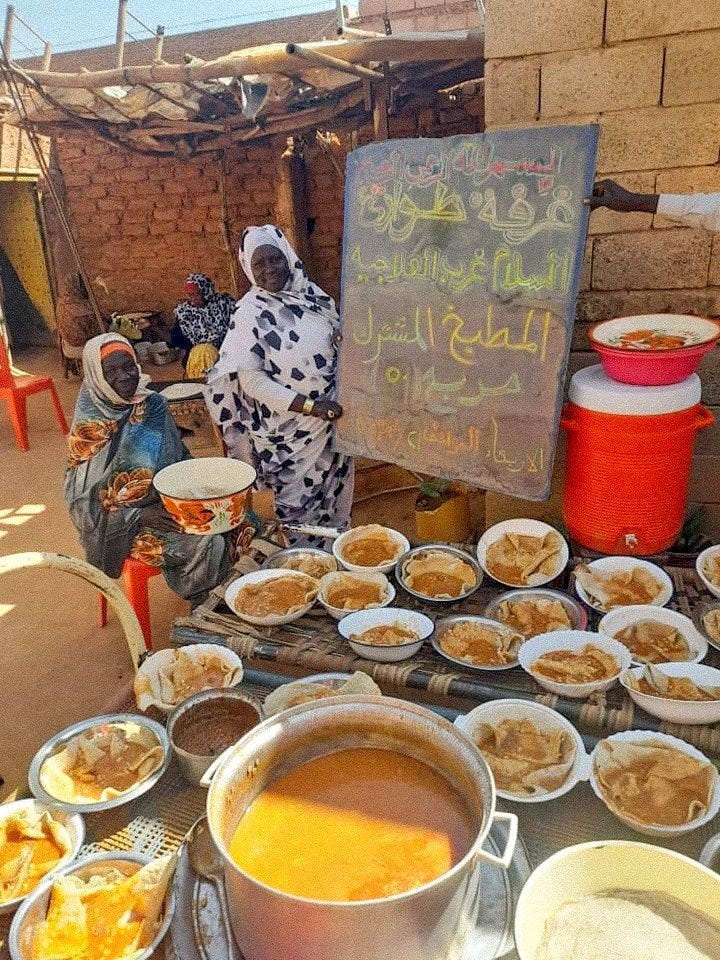
The Nobel Peace Prize will be announced tomorrow. As we await the results, it’s worth revisiting an argument I have made for the past two years: Sudan’s Emergency Response Rooms should win the Nobel Peace Prize!
Sadly, the civil war in Sudan has only gotten worse over the past two years. And as the conflict has deteriorated, this network of Sudanese humanitarian workers has become even more important. So, below, is my case for why Sudan’s Emergency Response Rooms should become this year’s Nobel Laureates.
To learn more about Sudan’s Emergency Response Rooms, please take a listen to this 2024 Global Dispatches podcast episode with a member of this group. We discussed how this system of mutual aid works and how the Emergency Response Rooms have created a network of people of conscience who are building the foundations for peace in the midst of war. You can find that interview on Spotify, Apple Podcasts, or wherever you listen.
Who Are Sudan’s Emergency Response Rooms — and Why Should They Win the Nobel Peace Prize?
Sudan’s Emergency Response Rooms are a grassroots network of humanitarian aid groups operating in the midst of a war in Sudan. These groups sprang up almost immediately after war erupted in April 2023 between the Sudanese Armed Forces and the paramilitary Rapid Support Forces.
In the three and a half years since, Sudan has plunged into chaos. Famine had spread in parts of the country and there are credible accusations of genocide committed by the Rapid Support Forces in Darfur. By the numbers, Sudan is the largest humanitarian crisis in the world. Some 12 million people have been forcibly displaced from their homes, and over 30 million people are in need of humanitarian assistance.
Yet even as the country unraveled, ordinary Sudanese citizens mobilized. Many were young professionals who had led the peaceful 2018 protests that toppled a 30-year dictatorship and briefly ushered a transition to democracy. When war came, they organized Emergency Response Rooms (ERRs) across the country. These Rooms run schools, soup kitchens, pharmacies, medical clinics, even restore downed power lines. They adapt to whatever their communities need most, and with limited resources these volunteer groups are saving lives in the most difficult conditions imaginable.
“The terrifying diversity of this conflict demands a diversity of approaches,” Hanin Ahmed, External Relations Officer for Sudan’s ERRs, told the Clinton Global Initiative last year. “In one locality, a Room is a telemedicine hub. In another, it’s a women-led collective distributing seeds and tools. In a third, it’s youth volunteers providing lifesaving activities. This hyper-local, agile model is our strength. We saw early on that the most effective response wasn’t coming from outside. It was rising from within — from the courage of local volunteers: teachers, engineers, students.”
Mutual aid after disaster is nothing new. Neighbors tend to help neighbors in need. But what makes Sudan’s ERRs remarkable is their scale and coordination. A national network connects these local initiatives, and in so doing sustains a fragile social fabric in defiance of warlords determined to rip the country apart. The ERRs are not only delivering aid in the darkest circumstances, but also building the architecture of peace from the ground up. The ERRs are both saving lives and laying the foundations for peace that can help bring this awful war to an end.
They are beyond deserving of this year’s Nobel Peace Prize.
A fantastic proposal