


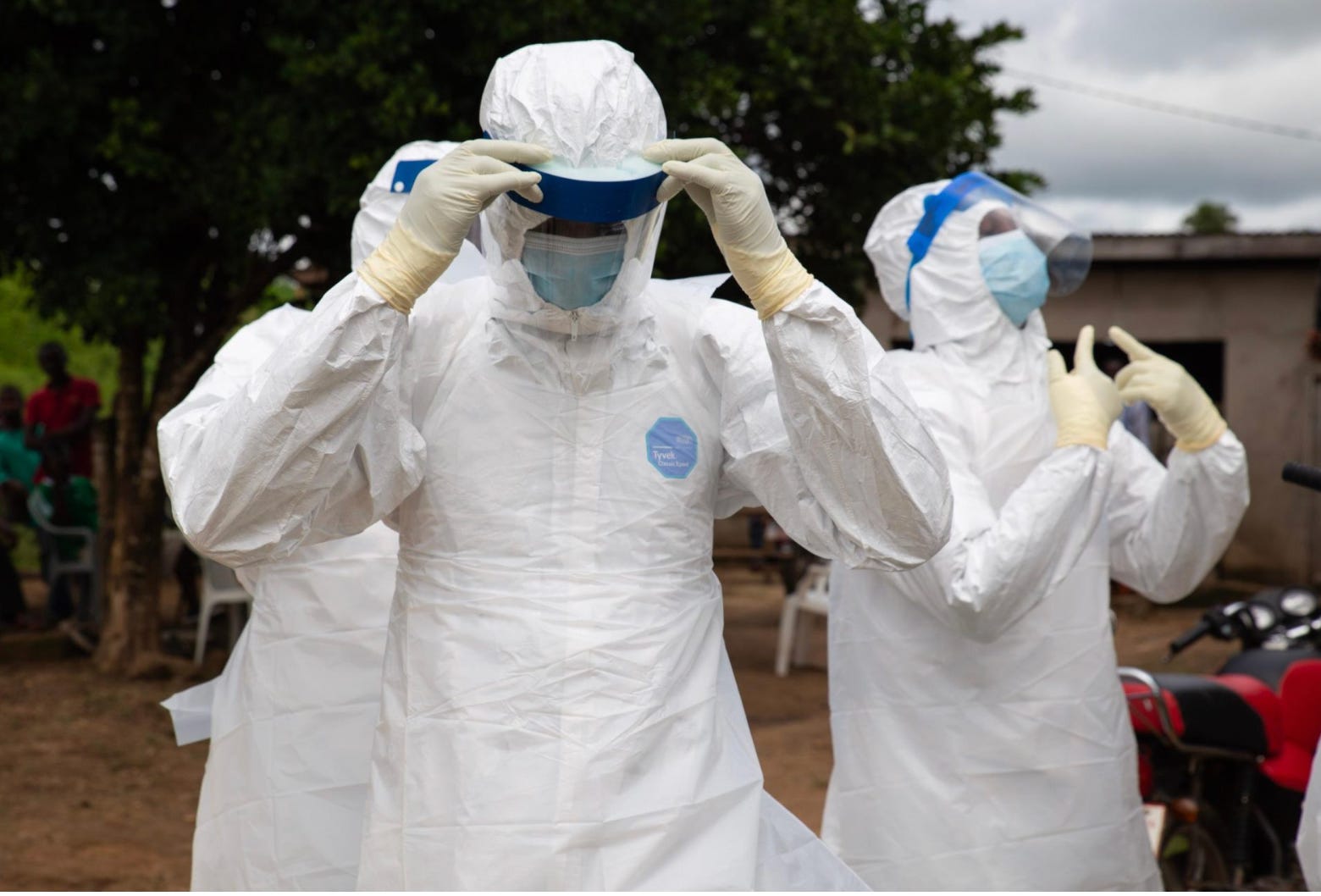
A whole lot of multilateralism goes into stopping an Ebola outbreak. Vaccines are developed and deployed by Gavi—the Global Alliance for Vaccines and Immunizations. Disease surveillance is often conducted by the Global Polio Eradication Initiative, which has developed sophisticated networks for tracking diseases of all sorts. The World Health Organization coordinates it all, including between national health authorities and international experts and aid workers who are trained in taking the kind of action required to contain an outbreak before it spreads internationally.
You may have seen our recent three-part series, Before the Outbreak, which describes how disease surveillance and outbreak prevention work. The upshot is that when local and international health officials, experts, and responders work together in a coordinated way, an uncontrolled outbreak can be prevented.
And when it works, it works!
It did not get much media attention at the time, but back in December I wrote about the remarkable speed with which the previous Ebola outbreak in the DRC was brought under control. But that piece ended with a warning: unless these platforms are adequately supported, their ability to repeat this kind of success is far from assured.
We are now seeing the consequences of the Trump administration’s decision to pull away from the systems that prevent deadly outbreaks like Ebola.
